

approx. 10 min. reading time

Quality in the Era of Complex Software Systems: The Strategic Approach of Quality Engineering [2/2]
Written by Lilia Gargouri /
June 2026

Table of Contents:
Quality engineering is a synthesis of organisational and methodological approaches. It combines architecture, processes, automation, data, models and tools into a comprehensive system that systematically enables and ensures quality throughout the entire software lifecycle.
For me, Quality Engineering is far more than a modern buzzword. It is a mindset, a way of thinking, and a structured approach to ensuring software quality in a sustainable, scalable, and economically viable manner. Modern software systems are shaped by microservices, cloud infrastructures, continuous deployments, data-driven architectures, and increasingly also AI components. This growing complexity means that it is no longer sufficient to evaluate quality solely at the end of a development process or reduce it to isolated testing activities. Today, quality does not emerge at a single point in time but continuously as the result of deliberate decisions throughout the entire software lifecycle. This article explores why a strategic Quality Engineering approach is indispensable in the era of complex software systems, which principles it is based on, and how organizations can sustainably ensure quality without sacrificing speed, innovation capability, or economic efficiency. The goal is to view Quality Engineering not as yet another framework or toolset, but as a long-term investment in stable systems, satisfied users, and more resilient organizations.

Test Automation as a Foundational Pillar of Quality Engineering
In Quality Engineering, test automation is not an isolated tool but an integral component of a systematic quality approach. Its objective is not merely to accelerate test execution, but to provide reliable, repeatable, and scalable quality assurance throughout the entire lifecycle of a system.
Automated tests create the prerequisite for obtaining feedback on system behavior early and continuously. Unit, integration, interface, and end-to-end tests represent different levels of quality evaluation. What is decisive, however, is not the quantity of automated tests, but their integration into a well-designed quality architecture. Test automation is particularly effective when it is based on clear business and technical models, stable interfaces, controllable test data, and a maintainable automation architecture.
Within the context of Quality Engineering, test automation is therefore understood as a long-term investment. Test frameworks, test data strategies, abstraction layers, and reuse mechanisms are deliberately designed so that tests do not become a maintenance risk whenever the system changes. The objective is a robust automation landscape capable of absorbing changes within the system without test effort increasing proportionally.
Furthermore, test automation provides valuable data for quality governance. Test results, defect rates, execution coverage, and stability metrics make quality trends measurable and support risk-based decision-making. Automated tests are therefore not only a verification mechanism but also a sensor for system quality and a source of data for continuous quality management.
Understood in this way, test automation in Quality Engineering is neither an end in itself nor a replacement for human judgment. It assumes responsibility for repeatable, structural verification tasks, thereby creating capacity for exploratory testing, business evaluation, and strategic quality work. In complex and long-lived software systems, it thus becomes an indispensable foundation for scalable, cost-effective, and reliable quality assurance.
Managing Quality in Operations: Monitoring and Feedback as Part of Quality Engineering
Quality Engineering extends beyond successful testing and go-live. Many quality characteristics become apparent only under real-world conditions: actual load distributions, unexpected usage paths, rare failure states, or security-relevant anomalies often become visible only during productive operation. Performance, stability, security, and actual usage patterns therefore cannot be assured exclusively in advance but must be continuously observed and evaluated during operation.
To achieve this, telemetry, structured logging, monitoring, tracing, and systematic user feedback become permanent components of the same quality system. Business and technical metrics—such as defect rates, response times, process abandonment rates, or unusual usage patterns—make visible how the system actually behaves. As a result, quality is not merely observed but becomes measurable, explainable, and comparable over time on the basis of reliable data.
The decisive added value emerges through the systematic feedback of these insights. Observations from operations are deliberately fed back into requirements, architectural decisions, models, and test strategies. Critical usage paths can be safeguarded more extensively through automation, recurring root causes can be resolved structurally, and risk areas can be prioritized in a targeted manner. Quality assurance thereby becomes capable of learning and evolves together with the system.
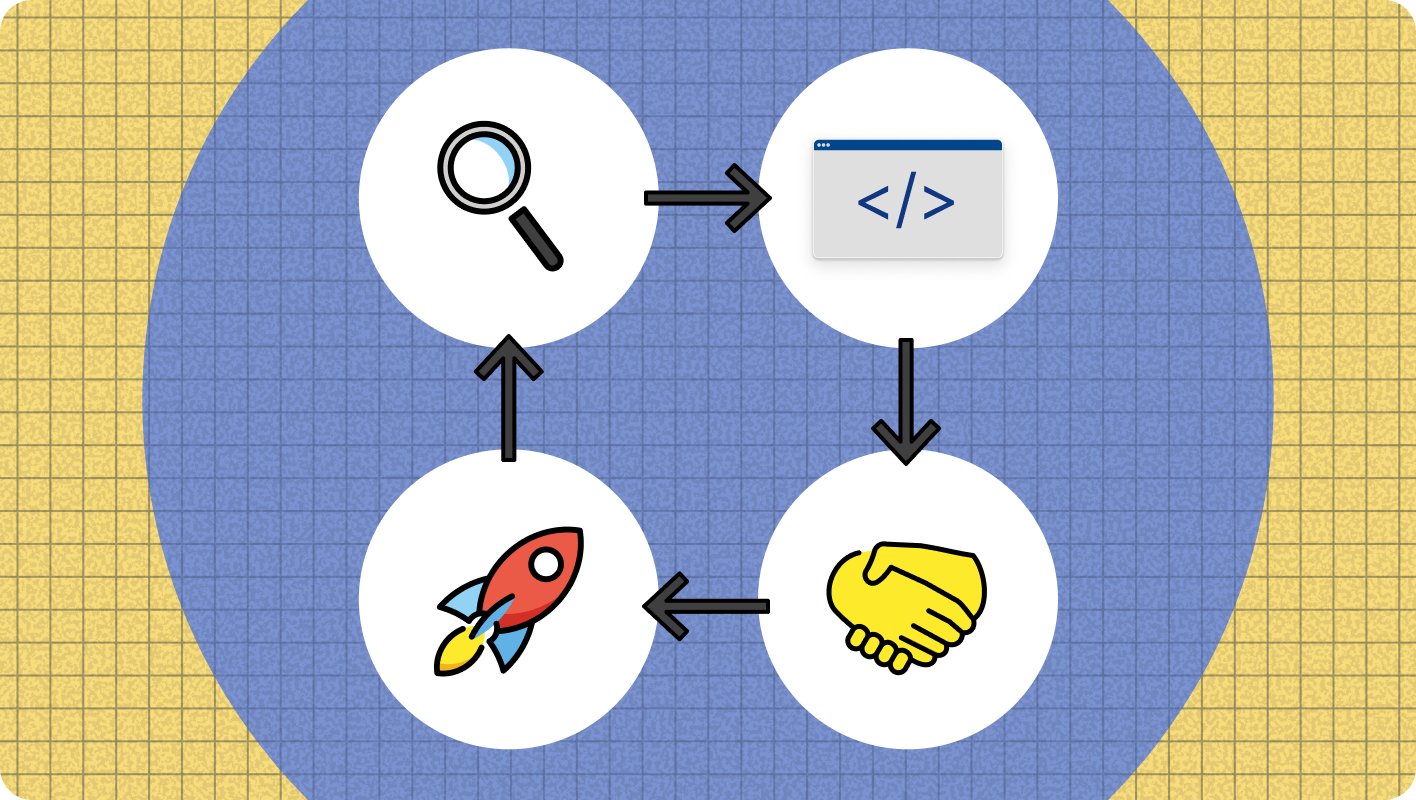
Quality Engineering thus consciously combines Shift Left and Shift Right: quality is prepared proactively at an early stage and simultaneously monitored analytically during operation. Through these closed feedback loops, a continuous improvement process emerges in which real-world usage systematically contributes to the further development of architecture, models, tests, and quality measures. Quality is therefore not a state that is achieved once, but a continuously managed process.
AI and Quality Engineering
Artificial Intelligence extends existing data-driven governance mechanisms in Quality Engineering by automatically analyzing large volumes of structured quality information. It does not transform quality assurance by replacing human expertise, but by expanding the reach and effectiveness of Quality Engineering. Modern QE systems generate extensive, structured information assets: business logic models, test data spaces, coverage metrics, runtime data, defect rates, usage profiles, and dependency graphs. These artifacts provide a reliable data foundation for the targeted use of AI.
In this context, AI can identify patterns that are difficult for humans to recognize: unexpected rule interactions, anomalies within data spaces, changing risk profiles, or the gradual erosion of test coverage. It can help dynamically adjust test priorities, identify risk zones at an early stage, and generate recommendations for additional tests, data variations, or model refinements. Quality is thereby not only verified but continuously observed, evaluated, and proactively improved.
One point is decisive, however: AI delivers value only where Quality Engineering already provides structure. Without clean business models, consistent test data, defined quality metrics, and a reliable automation architecture, AI remains an imprecise auxiliary tool. Only when quality is technically described, made measurable, and systematically captured can AI derive reliable, explainable, and actionable insights from it.
This interaction creates a new level of industrial quality assurance: Quality Engineering provides the methodological and technical foundation, while AI enhances analytical, predictive, and optimization capabilities. As a result, quality assurance evolves from reactive defect detection into a learning, adaptive quality system that remains effective even as complexity continues to increase.
Organization, Collaboration, and Cross-Functional Responsibility for Quality
Quality Engineering is not merely a methodological or technical approach; it is also an organizational principle. In complex software systems, quality does not emerge within individual roles or isolated phases, but through the coordinated interaction of different responsibilities throughout the entire lifecycle. Particularly in agile and dynamic organizational structures, this means that responsibility for quality cannot be delegated or assigned selectively. Instead, it must be consciously shared across all participating roles and actively assumed. Building shared quality competencies across role and discipline boundaries therefore becomes a central prerequisite for effective and sustainable Quality Engineering.
Business departments define business rules, risks, and quality objectives. Architecture translates these requirements into sustainable structures and technical guardrails. Development ensures a robust, maintainable, and testable implementation. Quality assurance designs verification strategies, models, automation, test data, and metrics that create transparency regarding the actual state of quality. Operations and monitoring provide feedback from real-world usage and make visible how systems behave under load, in failure scenarios, or over extended periods of time.
Within Quality Engineering, these contributions are not delivered sequentially or in isolation but are systematically interconnected. Shared models, end-to-end metrics, and integrated tools create a unifying layer through which information about requirements, risks, tests, and operational experience is consolidated. Quality thereby becomes a shared governance objective that connects business, technical, and organizational aspects.
Cross-functional responsibility does not mean that everyone does everything. It means that each role understands quality as an integral part of its own responsibilities and makes decisions in the context of the overall system. Requirements are formulated in a way that makes them unambiguous, consistent, and testable. Architecture deliberately considers testability, observability, and modifiability. Development focuses on maintainability, understandability, and automability. Quality assurance collaborates closely with development, architecture, and business stakeholders and provides data-driven feedback rather than merely performing downstream verification activities.
At the organizational level, this requires clear responsibility models, shared quality objectives, and transparent decision-making foundations. Quality metrics, risk overviews, and coverage levels are not only collected technically but also used as governance information. This provides leadership with a well-founded basis for setting priorities, directing investments, and consciously managing risks.
In this way, an organization emerges in which quality is neither created by chance nor delegated to a single department. Instead, it is established as a continuous, shared responsibility. Quality Engineering creates the structural, methodological, and cultural conditions necessary for effective collaboration across roles and organizational boundaries and for quality to be assured systematically, transparently, and sustainably.
Metrics in Quality Engineering: Making Quality Manageable
Traditional QA metrics primarily answer one question: How good is the product at present? They measure defect rates, test coverage, or release stability. While this information is important, it primarily reflects outcomes. Quality Engineering goes a step further and additionally asks: How capable has our system become of reliably producing quality?
This shifts the focus not only to the quality status of the software but also to the effectiveness of the entire quality system. In addition to product-related indicators, complementary metrics are therefore collected that make the success of Quality Engineering processes visible.
A central aspect is learning and feedback capability. How quickly are insights from defects or incidents fed back into architecture, models, tests, or monitoring? If the recurrence rate of similar defect types decreases over time, this indicates that problems are not merely being corrected but are being addressed structurally.
Metrics related to constructive quality capability are equally important. These include, for example, the degree of component testability, the coverage of observability mechanisms, or the proportion of requirements with clearly measurable acceptance criteria. Such indicators reveal whether quality is being systematically prepared within design and architecture or only becoming visible later during testing.
In the area of automation, the primary focus is not the number of automated tests but their effectiveness. Test execution stability, maintenance effort, feedback speed following changes, and the targeted safeguarding of particularly high-risk system areas are significantly more meaningful than pure quantity-based measures.
Furthermore, data-driven governance metrics are gaining importance. Are test priorities adjusted based on real usage data or risk models? Can production issues subsequently be linked to risk indicators that were previously identifiable? Such relationships demonstrate whether quality is becoming increasingly predictable and purposefully manageable.
Organizational indicators are also part of the overall picture. The proportion of structurally improving measures compared to purely reactive defect correction, the reuse of testing and modeling artifacts, or the number of cross-functional quality initiatives provide insight into whether Quality Engineering has become embedded as a lasting organizational capability.
Finally, economic effects can also be observed. Is defect detection shifting into earlier phases? Are costs per detected defect decreasing? Is system stability maintained despite increasing rates of change? Such trends demonstrate that Quality Engineering delivers not only technical but also economic value.
Through these expanded metrics, not only the current quality status is evaluated, but also the organization’s ability to systematically create and maintain quality. This is precisely where a key distinction between traditional quality assurance and Quality Engineering lies: not only the product is governed, but also the system that produces its quality.
Outlook: Quality as a Continuous Design Responsibility
The importance of Quality Engineering will continue to grow in the future. Software systems are becoming larger, more interconnected, more heavily regulated, and at the same time are evolving more rapidly. In this environment, it is no longer sufficient to verify quality selectively or reactively respond to problems. What is needed are structures that enable organizations to remain effective under conditions of uncertainty, pressure for change, and technological dynamism.
This is precisely where the long-term value of Quality Engineering lies: it creates the conditions for viewing quality not as a by-product of individual measures, but as an actively designable system property. Models, architectural principles, automation, metrics, and operational feedback evolve into a cohesive quality governance system. This system continuously develops further—with every release, every new requirement, and every operational insight.
The increasing use of AI, adaptive systems, and data-driven functionality introduces additional challenges: systems become less deterministic, decisions less transparent, and failure scenarios more difficult to predict. For precisely this reason, robust quality structures, understandable models, clear responsibilities, and technical mechanisms for observability and control are required. Quality Engineering provides the framework for designing such systems responsibly, transparently, and in a controllable manner.
Looking ahead, the picture is clear: Quality Engineering is not a temporary methodology but a long-term development path. Organizations that begin today to systematically model, measure, automate, and integrate quality into their architecture and decision-making processes are building a capability that extends far beyond individual projects. They create the foundation for developing reliable, secure, and sustainable software even in an increasingly complex digital world.