

approx. 8 min. reading time

Gamification in Quality Engineering—What’s in it for me?
Written by Dr. Armin Metzger /
July 2026

Table of Contents:
When quality engineering meets gamification, motivation, team spirit, and the joy of continuous improvement all grow. Routines become motivating challenges, and quality becomes a shared goal.
We are living in challenging times. The use of artificial intelligence is on the rise, taking over more and more of our everyday tasks. But there’s one thing AI won’t be able to replace—at least not for the foreseeable future—and that’s human creativity: the ability to think beyond the familiar.
This is exactly where gamification techniques come in. They support our creative processes—in quality engineering as well as in constructive quality assurance measures or brainstorming about risks. And they can do even more. They promote communication and team cohesion, thereby counteracting the isolation that comes from interacting exclusively with AI.

Gamification as a Game-Changer
Gamification brings playful elements into our daily work. To achieve this, elements from classic and video games are transferred into a serious context [see Deterding2001]. This is not merely a pastime, but a means of achieving measurable benefits.
Gamification techniques can be implemented with minimal effort. But which technique is suitable if there is no prior experience with gamification in the project? It should require little time, be easy to apply, and deliver real value. As examples, we’ll examine three different gamification techniques and highlight their key benefits.
Embracing Creativity
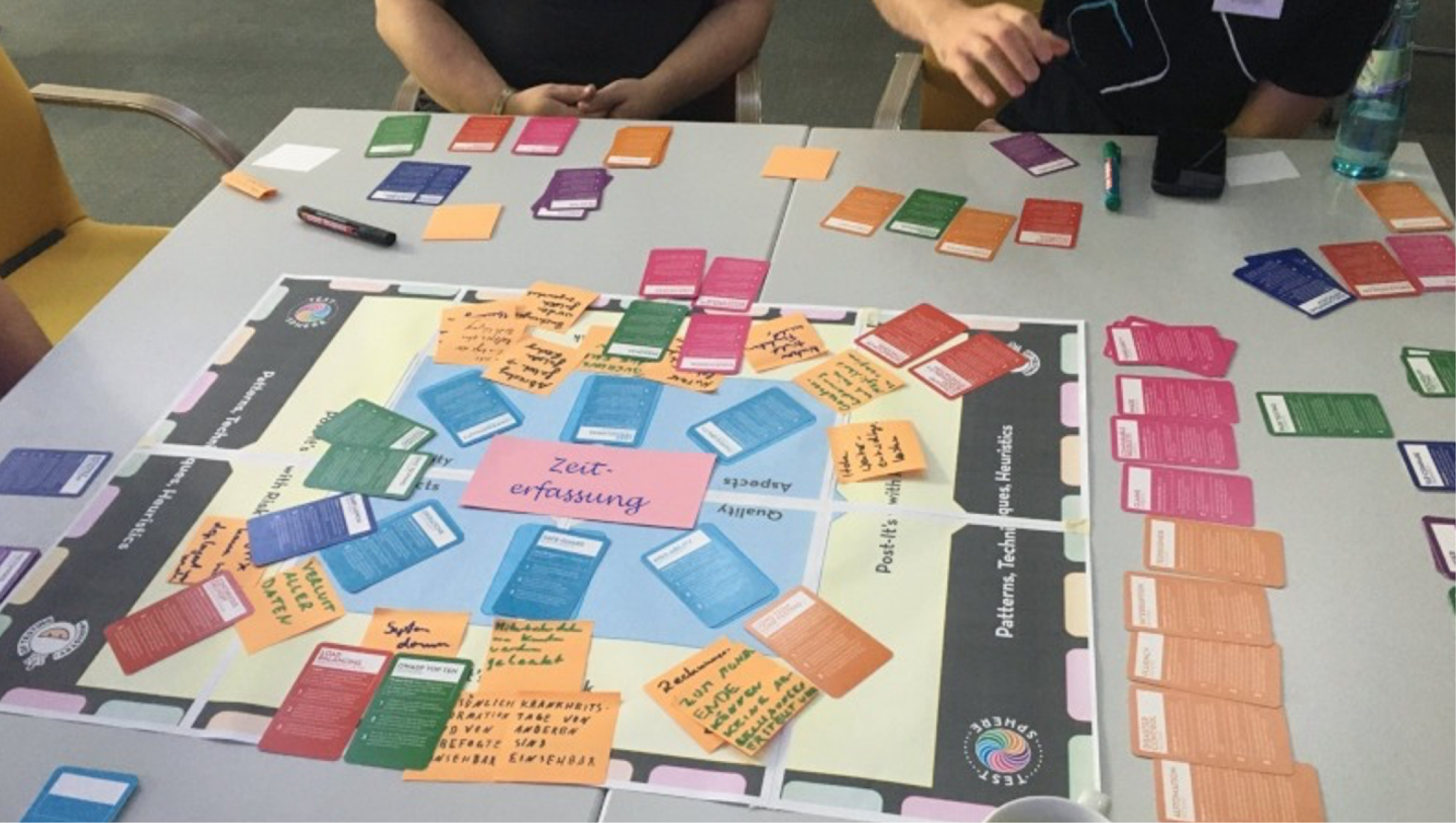
Figure 1: Risk Storming Session
Every project—and therefore every software project—is fraught with risks. Identifying these risks, analyzing their potential for harm, and taking countermeasures is an essential task for all project participants. Understanding risks helps prevent errors and improve quality, whether through constructive measures within the process or analytical measures such as risk-based testing.
But how do we identify risks beyond power outages and missed deadlines? What are the truly specific risks of our own project? Are we thinking outside the box?
Risk Storming [RiskStorming] [Güldali2023:3] is a gamification technique that supports brainstorming and guides the process from quality requirements to quality strategy. It is based on elements from strategic board games and is conducted in short sessions lasting about one to one and a half hours. There are different types of cards that are placed on a board during the session. A session consists of four phases.
In the first phase, the team must decide which six quality attributes are the most important for the software product under consideration. There are no more than six slots on the board, so initial discussions are to be expected at this stage. Is performance more important, or is usability more critical? Security or maintainability? Might another session be needed to address the cards not currently under consideration?
Once the team has agreed on the quality attributes, phase two involves a brainstorming session focused on the selected quality attributes. During this phase, risks are posted on the board using sticky notes, guided by the cards listing the quality attributes.
In Phase Three, the remaining cards are used: product, development, testing, and operations cards, as well as cards addressing social aspects. Here, the team considers how to address the risks. The cards provide useful suggestions.
Phase four concludes the Risk Storming session. Based on the considerations from the previous phase, actions are identified and scheduled.
Risk Storming is a lightweight format that helps identify risks and make them visible and transparent to the entire team and, above all, to stakeholders. The technique strengthens the creative process of risk identification and helps ensure that the identified risks are addressed.
Knowledge Transfer Made Easy
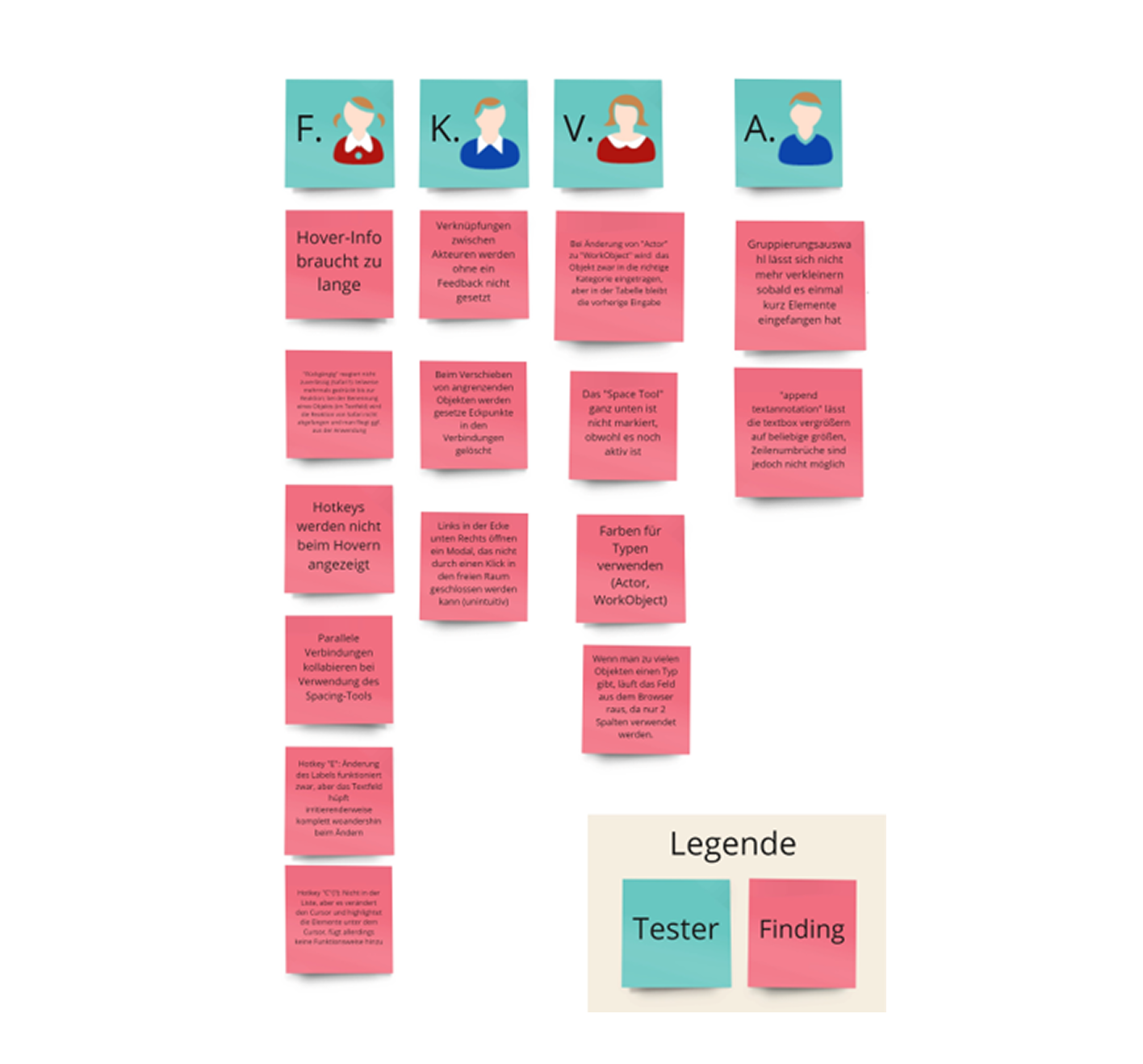
Figure 2: Results of a Bingo Bongo Session
Bug Hunting [Güldali2023:1] takes a different approach. While Risk Storming is a collaborative technique, Bug Hunting emphasizes a competitive element. Each participant tries to find as many bugs in the software as possible within the allotted time.
Bug hunting fits very well into agile development processes. In most cases, large portions of testing are automated; working through traditional test plans is often only possible to a limited extent due to rapid iterative development and, in many cases, is not even necessary. Nevertheless, a manual review can be useful, especially for new or modified functionalities.
One proven technique is Bingo Bongo Testing [BingoBongoTesting]. It defines clear rules and is highly effective, requiring minimal time and ensuring a high level of focus. One goal is to evaluate any bugs found and suggestions for improvement and log them in the issue-tracking system.
A session lasts about an hour. Depending on the focus and the project, developers or subject matter experts are invited. At the beginning of the session, the feature to be tested is presented. Then all participants, working independently, go on the hunt for potential problems in the software.
If one of the participants discovers a problem, they call out “Bingo Bongo,” share their screen, and demonstrate the finding. Afterward, all participants vote on whether it is truly a bug or a suggestion for improvement that should be addressed. They also determine whether it is a new or a known issue. If it is a new issue that needs to be fixed, the person who found it must create an issue in the issue-tracking system and gets a point.

Figure 3: Bug Hunting Award
Whoever has the most points—at the end of a session or across multiple sessions—wins. A small prize can be offered here, but in our experience, this isn’t strictly necessary. In most cases, finding the problems and fixing them promptly—before they cause issues in production—is sufficient motivation for the participants.
The primary goal of Bingo Bongo is, of course, to find bugs. Where there’s one bug, there are often others lurking nearby. Collaborative testing makes it easier to uncover clusters of bugs.
But there are also other benefits—sort of like a side effect. Because every finding is presented, including how it was discovered, knowledge is also shared. Good quality engineering is thus distributed throughout the team in a lighthearted way. And: finding bugs takes on a positive connotation—an important experience, especially for developers.
Strengthening Team Collaboration
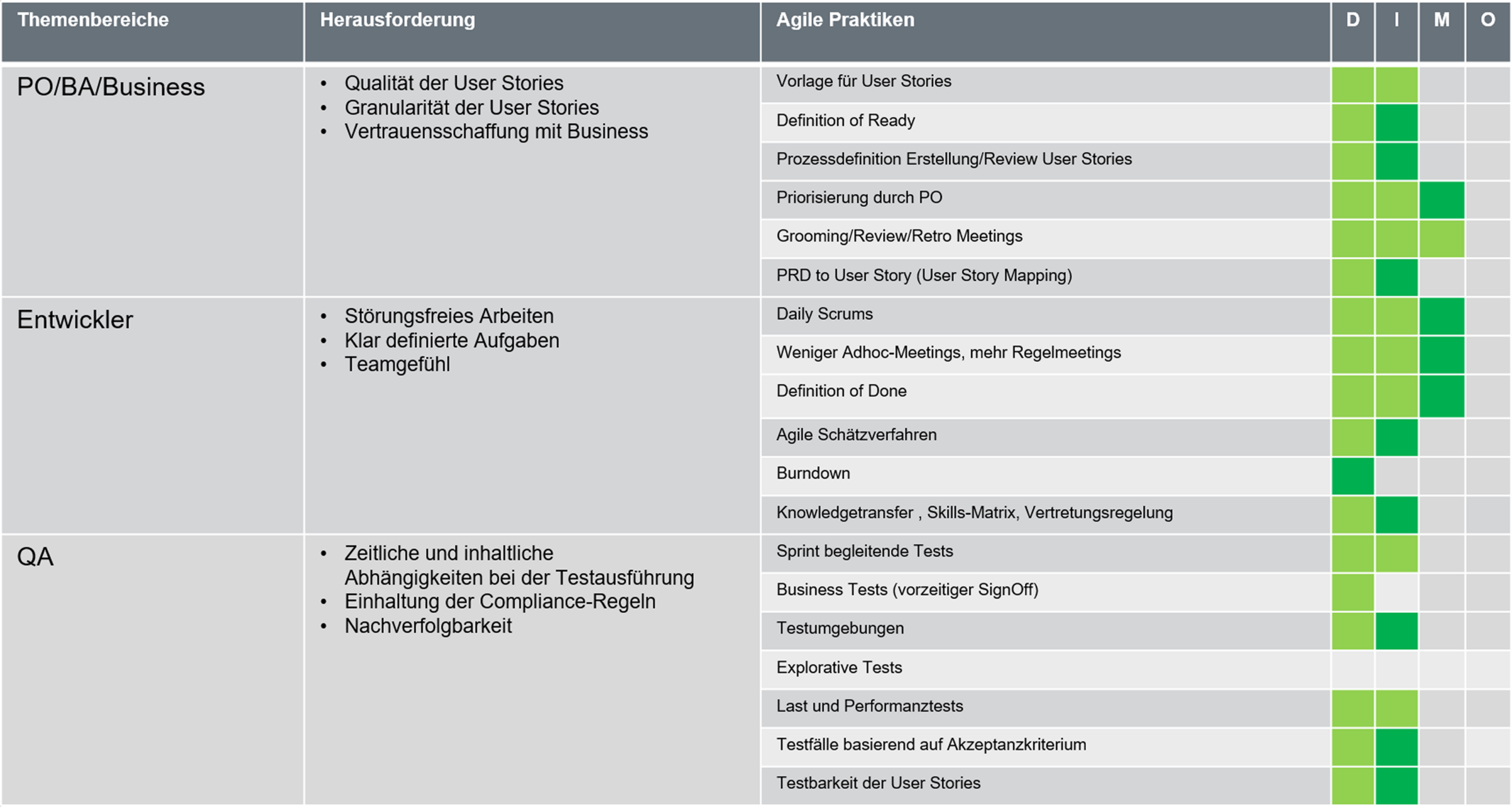
Figure 4: Example of Maturity Poker
Finally, let’s take a look at Maturity Poker [Güldali2023:2], a self-assessment technique. Teams often face the challenge of knowing where they stand, whether in agile transformation or in quality engineering.
Maturity Poker helps identify gaps and take concrete steps to improve the team’s current status. To do this, the team defines areas where improvement is needed. Templates with key topics—such as Quality Engineering—can be helpful here.
For each topic area, the team identifies the challenges it faces. Next, they determine the techniques and practices needed to address these challenges.
This is followed by the game-like element: poker. The team plays poker to determine how well they are already implementing the techniques and practices (maturity levels: defined, initiated, managed, optimized) and what level they aim to achieve. Together, they then propose and plan actions to reach a higher maturity level.
Although this is a collaborative approach, additional competitive elements can be incorporated. For example, we’ve seen maturity levels achieved posted as badges on social media, or the team member who contributed the most to improvement in the last sprint being recognized.
Change can have a disruptive effect on teams. Alongside other measures such as effective change management, Maturity Poker can help keep an established team cohesive or bring a new team together. Everyone works toward the shared goal of achieving a higher maturity level and makes a personal commitment to it. Motivation to achieve the goal increases.
Gamification Adds Value
Gamification techniques can be used strategically in everyday work, but they should not dominate it. After all, gamification is not meant to replace work with constant play, but rather to provide targeted support. When used correctly, these techniques are effective and efficient. They foster creativity, facilitate employee onboarding and training, and strengthen the team. To achieve these positive effects, however, a few things should be kept in mind.
For getting started, tried-and-true concepts are better than new, original ideas—Risk Storming, Bingo Bongo, or Maturity Poker, for example, have already proven their effectiveness. Once the team has gained some initial experience with gamification, original ideas and adaptations are, of course, possible and encouraged.
Every technique should come with clear and simple rules so that lengthy preparation and explanation times are not necessary.
It’s important to avoid confrontation, even when using techniques with a competitive nature. If there’s already tension within the team, it’s better to choose cooperative techniques like Risk Storming or Maturity Poker, which also help resolve conflicts and define a common goal. If everyone enjoys a playful competition, competitive techniques like Bingo Bongo are also an option.
Finally, participation in a gamification session should always be voluntary. In our experience, interest is usually so high that very few team members choose not to participate.
And: the use of gamification techniques can also be subject to a retrospective. If something isn’t working or isn’t yielding the expected results, adjustments should be made.
In this way, gamification breaks through stagnant processes, generates new ideas, and thus delivers real value.
References:
[Deterding2001] Sebastian Deterding, Miguel Sicart, Lennart Nacke, Kenton O’Hara, Dan Dixon. Gamification: Using Game Design Elements in Non-Gaming Contexts. In CHI ’11 Extended Abstracts on Human Factors in Computing Systems (CHI EA ’11). ACM, S. 2425–2428. https://doi.org/10.1145/1979742.1979575
[RiskStorming] Risk Storming von Beren Van Daele. https://www.ministryoftesting.com/collections/riskstorming
[BingoBongoTesting] Bingo Bongo Testing von Ronald Brill. https://www.bingobongotesting.org/
[Güldali2023:1] Baris Güldali, Dehla Sokenou. Gamification in der Qualitätssicherung, Teil 1: Fang den Bug! JavaMagazin 4.2023, S. 50-54, Februar 2023
[Güldali2023:2] Baris Güldali, Dehla Sokenou. Gamification in der Qualitätssicherung, Teil 2: Poker um den Prozess! JavaMagazin 5.2023, S. 94-97, April 2023
[Güldali2023:3] Baris Güldali, Dehla Sokenou. Gamification in der Qualitätssicherung, Teil 3: Schach dem Risiko! JavaMagazin 7.2023, S. 92-97, Juni 2023